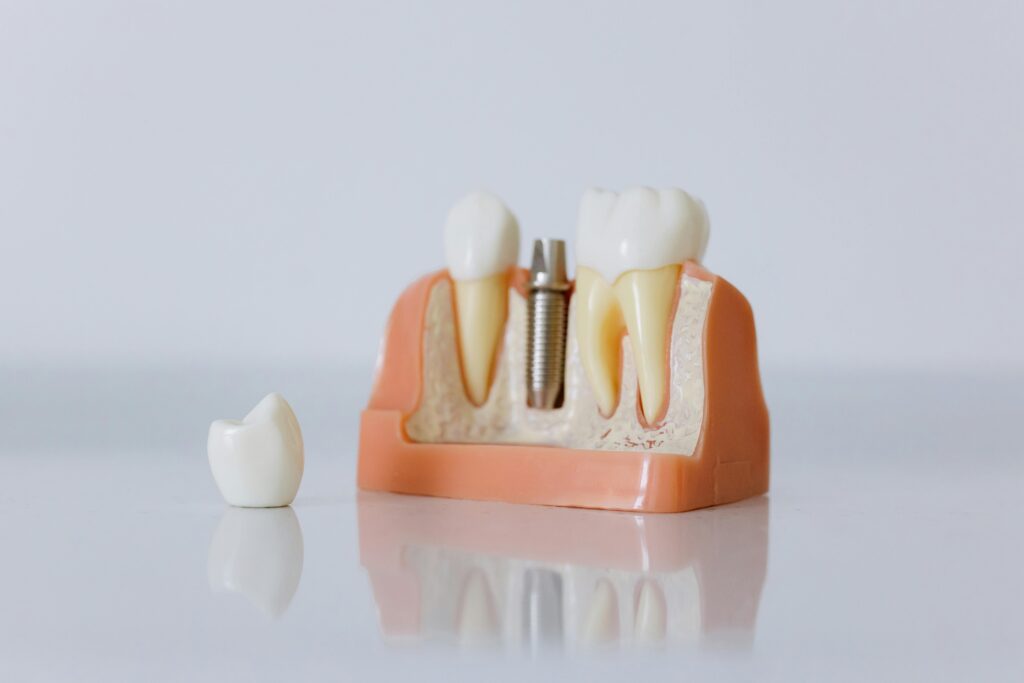
When people hear the phrase dental implants, they often picture the standard implant most dentists place for a single missing tooth, a titanium post that is wider, longer, and restored after a healing period. Mini dental implants belong to the same family, but they are not simply a smaller version of the same treatment in every sense. They solve a different set of problems, fit a narrower range of indications, and require more careful case selection than marketing materials sometimes suggest.
That distinction matters. In practice, mini implants can be genuinely useful, especially for stabilizing loose dentures or managing areas where bone is limited. They can also disappoint when they are used as a shortcut in situations that really call for a conventional implant, grafting, or a different restorative plan altogether. Patients usually do Dental Implants Oaks Dental best when they understand both sides before making a decision, rather than focusing only on the appeal of a smaller implant, lower upfront fee, or quicker procedure.
What makes a mini implant different
A mini dental implant is typically narrower than a conventional implant. While exact dimensions vary by manufacturer and clinical system, standard implants often fall somewhere around 3.5 to 5 millimeters in diameter, while mini implants are usually under 3 millimeters. That narrower profile is the defining feature, and it changes nearly everything about how the implant is placed, loaded, and maintained.
Many mini implants are also designed as a one-piece unit. In a traditional two-piece system, the implant body sits in the bone and an abutment is connected later, either at the time of placement or after healing. With many mini systems, the abutment portion is already built into the implant. This can simplify treatment and reduce components, but it also limits flexibility. If the angle is not ideal, there is often less room to correct it prosthetically.
That is why mini implants are often discussed not just as smaller dental implants, but as implants with a distinct role. Their main strengths show up where minimal invasiveness matters and where the bite forces are lower or spread across multiple implants.
Why they became popular
There are practical reasons mini implants gained traction. The procedure can be less invasive. In many cases, placement requires a smaller osteotomy and may not need the same level of flap reflection as a standard implant procedure. Patients often appreciate the shorter chair time, less post-operative swelling, and the possibility of immediate improvement in denture stability.
Cost also plays a role. A mini implant case can be less expensive than conventional implant treatment, particularly when the alternative would involve bone grafting, sinus augmentation, or a more complex surgical sequence. For an older adult struggling with a lower denture that slides every time they speak or chew, the promise of better retention without major surgery can be life changing.
There is also a demographic reason. Many people who seek help for unstable dentures are in their sixties, seventies, or eighties. Some have medical conditions that make lengthy procedures less appealing. Others simply want function back quickly and are not interested in a long treatment timeline. In those situations, mini implants can be a reasonable tool when the anatomy and expectations line up.
Where mini dental implants work best
The most common and often most successful use of mini implants is denture stabilization, especially for the lower arch. A lower denture can be notoriously difficult to keep stable because the tongue, floor of the mouth, and limited suction work against it. Even a well-made lower denture can feel insecure. Adding several mini implants to retain that denture can dramatically improve comfort and confidence.
Patients often describe the change in simple terms. They stop worrying that the denture will lift while eating. They can bite into softer foods with less movement. Speech improves because they are no longer unconsciously trying to hold the denture in place with their facial muscles. For someone who has spent years cutting food into tiny pieces and avoiding social meals, that is a significant quality-of-life improvement.
Mini implants may also be used in narrow ridges where placing a conventional implant would be difficult without grafting. The key point is that “possible” does not automatically mean “best.” There are situations where a narrow ridge is better treated with ridge augmentation and a standard implant, particularly if the goal is a long-term fixed crown in a high-load area.
There are also selective cases involving small lateral incisors or limited spaces between roots, where a narrow implant may be part of the conversation. These cases require careful imaging and prosthetic planning. The smaller implant helps fit the available anatomy, but the bite, crown dimensions, and parafunctional habits still determine whether the treatment is wise.
The real advantages, not the sales pitch version
The value of mini implants is easiest to understand when you look at the patient experience rather than the brochure.
First, surgery is often simpler. Less tissue manipulation can mean a smoother recovery. Patients who are anxious about oral surgery often tolerate mini implant placement better than they expected. It is not painless and it is not trivial, but it can feel more manageable.
Second, treatment may move faster. In selected denture cases, clinicians can often provide retention quickly, sometimes on the same day or soon after placement. That speed matters to people who have already spent months frustrated by a loose prosthesis.
Third, mini implants may reduce the need for grafting. Bone grafting is sometimes the right answer, but it adds cost, healing time, and complexity. In a patient who needs better denture retention rather than a fully fixed cosmetic restoration, avoiding grafting can be a meaningful benefit.
Fourth, the price is often lower. That does not make mini implants the better choice by default, but cost influences access. Many patients are deciding between some treatment and no treatment. A more affordable implant option can move care from hypothetical to achievable.
Finally, mini implants can improve function in people who had begun to accept poor chewing and unstable dentures as inevitable. Dental Implants That emotional side should not be dismissed. Dentistry is not only about radiographs and torque values. It is also about whether a person can eat with family, speak without self-consciousness, and stop planning their day around denture adhesive.
The limitations that deserve equal attention
The narrower diameter that makes mini implants useful also makes them more mechanically vulnerable. A smaller implant has less bulk to resist bending forces. In the mouth, force is rarely purely vertical. People clench, grind, chew unevenly, and create lateral stress with every meal. Over time, those off-axis forces matter.
That is why mini implants are generally less forgiving in heavy bite situations, especially in posterior regions where chewing forces are stronger. A single narrow implant supporting a crown in a high-load area may face greater mechanical risk than a standard implant of adequate diameter. This is one of those points that can get blurred in oversimplified advertising. Yes, a mini implant can be placed in many places. No, that does not mean every placement has the same long-term prognosis.
The one-piece design common to many mini systems can also be a drawback. If implant angulation is slightly off, restorative options may be limited. With two-piece systems, clinicians often have more freedom in abutment selection and correction. That flexibility can be valuable, especially in the aesthetic zone or when space is tight.
Longevity is another nuanced issue. Some mini implants perform well for years, especially when used for overdenture retention in carefully selected cases. But long-term outcome data for mini implants as broad substitutes for conventional implants are not as strong or as universal as many patients assume. The narrower the indication, the more comfortable most experienced clinicians are with the prognosis.
Maintenance should be part of the discussion too. O-rings, housings, and denture attachment components wear over time. Dentures may need relines. Patients sometimes hear “less invasive” and assume “low maintenance.” In reality, overdenture systems are functional, but they are not maintenance free.
When mini implants make especially good sense
A practical way to think about mini implants is to match them to the problem they solve best. They shine when the clinical goal is retention rather than heavy-load replacement with idealized fixed restorations.
The strongest indications often include the following:
- Stabilizing a lower denture that lacks retention Helping retain an upper denture in selective cases with careful planning Managing narrow bone where grafting is not ideal and treatment goals are modest Serving medically or financially constrained patients who need a less invasive option Providing transitional or limited-scope support in well-defined cases
Even here, judgment matters. An upper denture, for example, behaves differently from a lower one. The maxillary bone is often softer, force patterns differ, and implant number and distribution become especially important. What works predictably in the mandible may be less straightforward in the maxilla.
Where caution is warranted
Some situations should prompt a slower, more critical conversation. A patient with heavy bruxism, a deep bite, or a habit of clenching during the day may overload mini implants quickly. Likewise, a patient asking for a fixed molar replacement in an area of heavy occlusion may be better served by a conventional implant, even if that means additional preparation or grafting.
Bone quality matters as much as bone quantity. Narrow implants in poor-quality bone can be a frustrating combination. Initial stability may be achievable, but long-term resistance to functional stress can still be compromised. Smoking, uncontrolled diabetes, active periodontal disease, and poor oral hygiene complicate the picture just as they do with standard dental implants.
There is also the issue of expectations. Some patients hear “implant” and imagine a permanent, worry-free, never-needs-attention solution. Others believe that because mini implants are smaller, they are somehow temporary by nature. Neither assumption is reliable. The treatment can be durable, but it depends heavily on use case, design, bite forces, maintenance, and the skill of the team planning it.
Mini implants versus conventional implants
The simplest comparison is not “better” versus “worse.” It is “appropriate for this purpose” versus “less appropriate for this purpose.” That may sound obvious, but it is the point most likely to get lost.
| Feature | Mini dental implants | Conventional dental implants | | --- | --- | --- | | Typical diameter | Usually under 3 mm | Commonly 3.5 mm or wider | | Surgical approach | Often less invasive | More variable, often more involved | | Best-known use | Denture stabilization | Single-tooth and multi-unit fixed restorations | | Prosthetic flexibility | More limited in many systems | Generally greater flexibility | | Resistance to heavy load | Lower, especially in demanding bites | Better suited for higher-force situations |
That table captures the broad idea, but actual treatment planning lives in the gray areas. A healthy patient with a narrow ridge and low bite force may do well with a narrow implant option. A patient with broad chewing forces and a history of broken restorations may not.
What the procedure is usually like
For many patients, the placement visit is shorter than they fear. After exam, imaging, and treatment planning, the area is numbed, the site is prepared, and the implant is inserted. In some mini implant protocols, tissue reflection is minimal or avoided altogether. That contributes to the reputation for easier recovery.
When mini implants are used to retain a denture, the denture may be modified to engage the implant attachments once stability is confirmed. Patients often notice the difference immediately. I have seen people smile in that slightly surprised way that happens when they speak a sentence and the lower denture does not shift halfway through.
Recovery is usually manageable, though not identical for everyone. Mild soreness, pressure, and localized tenderness are common. Soft foods are typically advised at first. The important nuance is that “same-day function” does not mean “return to chewing anything you want by dinner.” Early loading must still respect biology and mechanics.
The planning stage matters more than the hardware
The temptation with mini implants is to focus on the product, as if success comes from choosing a smaller fixture. In reality, success comes from diagnosis. The bite has to be evaluated. Bone dimensions and density have to be understood. The prosthesis has to be examined honestly. Sometimes the loose denture is not only a retention problem, it is also a fit problem, a wear problem, or a jaw relation problem. Anchoring a poorly designed denture to implants does not magically make it a good prosthesis.
That is one of the more common disappointments in implant overdenture work. A patient receives retention, but still struggles because the denture base is overextended, underextended, worn down, or aesthetically compromised. The attachments help, but they do not solve every flaw. Good clinicians usually address that upfront, either by remaking the denture or by setting expectations clearly.
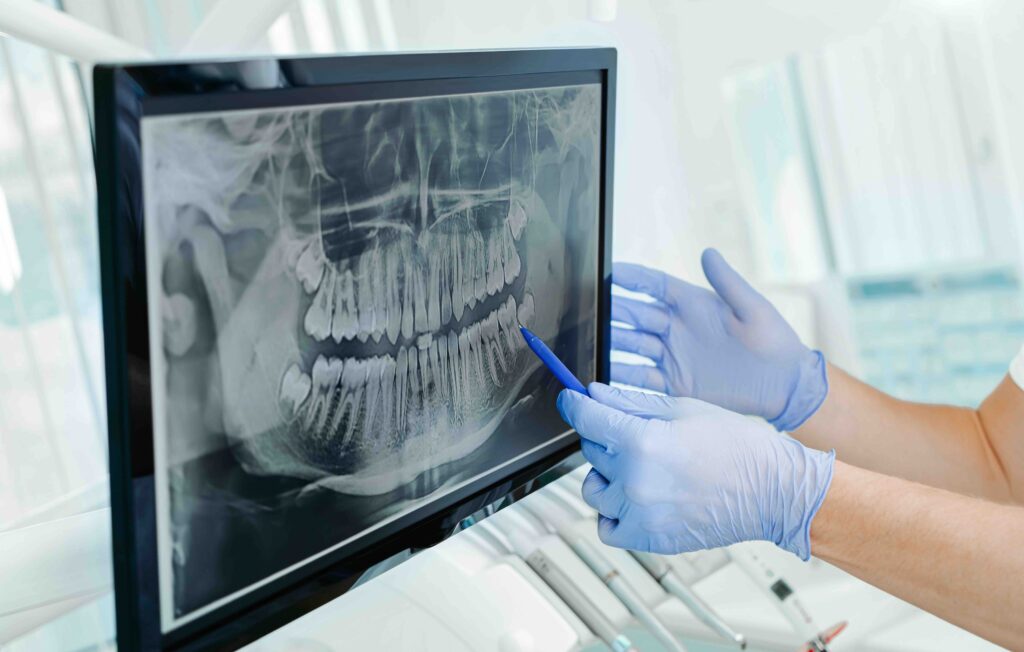
Imaging is another important piece. Cone beam CT has improved implant planning substantially because it reveals ridge width, bone contours, undercuts, and anatomical limitations more accurately than two-dimensional films alone. For narrow implants in particular, small anatomic misjudgments can matter.
Cost, value, and the hidden math of treatment
Patients often ask whether mini implants are “worth it.” The honest answer depends on what they are comparing them to. If the comparison is a lower denture with adhesive versus a well-planned mini implant overdenture, many patients would say the improvement in daily life is absolutely worth the expense. If the comparison is a mini implant used as a compromise where a standard implant would likely perform better long term, the calculation changes.
It helps to think beyond the initial fee. A lower upfront cost can still become expensive if the treatment is poorly matched to the case and requires repairs, remakes, or replacement. On the other hand, a modestly priced mini implant solution that works well for eight to ten years, with routine maintenance along the way, may represent excellent value for the right patient.
Financial discussions should also include upkeep. Attachment replacement, denture relines, and periodic adjustments are normal parts of care. That does not mean the treatment is failing. It means the prosthetic system is doing what prosthetic systems do under daily use.
Questions worth asking before saying yes
Patients tend to get the clearest answers when they ask practical, case-specific questions rather than broad ones. A useful consultation often turns on details like these:
- Why are mini implants being recommended instead of conventional implants in my case? How many implants are planned, and why that number? Is my denture in good enough condition to work with implants, or should it be remade? What kind of maintenance should I expect over the next few years? If this approach fails, what are the backup options?
Those questions shift the conversation from sales language to treatment reasoning. That is where informed consent really lives.
The role of experience and restraint
There is a pattern you notice over time in implant dentistry. Good outcomes are often less about doing the most treatment and more about choosing the right amount of treatment. Mini implants reward that kind of restraint. Used thoughtfully, they can offer meaningful improvement with less surgery and lower cost. Used carelessly, they can become a compromise that solves the short-term problem while creating a longer-term one.
The difference is usually not visible in the advertisement. It shows up in the examination room, in the way the bite is analyzed, in whether the prosthesis is assessed honestly, and in whether the clinician is willing to say, “This could work, but it is not the best option for you.”
That sort of judgment is not flashy, but it is what patients are actually paying for.
Who is usually happiest with mini implants
The happiest mini implant patients are often not chasing perfection. They want stability, comfort, and a practical improvement in daily living. They want to chew with more confidence, use less adhesive, and stop worrying that their denture will move when they laugh. For that person, mini implants can be a smart and satisfying form of dental implant treatment.
Patients seeking a single idealized fixed tooth replacement in a high-force area, especially with strong cosmetic demands or challenging occlusion, may be happier with a different plan. That plan may involve conventional implants, grafting, or a staged approach. It may cost more and take longer. It may also be the more durable answer.
Mini dental implants are neither miracle devices nor second-rate placeholders. They are a specific tool with real strengths and real limits. When those limits are respected, they can provide some of the most noticeable functional improvements in everyday dentistry. When they are ignored, the small size that made them attractive in the first place can become the very reason the case struggles.
Oaks Dental
5000 Parkway Calabasas Suite 308
Calabasas, CA 91302, United States
+1 818-431-2000
FAQ About Dental Implants
What is the downside of a dental implant?
Implants require surgery and a healing period that can last several months. Possible complications include infection, nerve or sinus injury, damage to nearby teeth and failure to bond with bone. Your dentist should assess your health, bone support and alternatives before recommending treatment.
What do dental implants typically cost?
There is no single price for every implant case. The number of teeth replaced, implant components, final restoration and any grafting or extractions affect the total. Request a written estimate covering every stage and confirm insurance benefits and out-of-pocket costs with the practice.
How long do tooth implants last?
An implant can provide long-term support and may last a lifetime with good oral hygiene and regular dental care, but this is not guaranteed. The crown or other restoration may need replacement sooner. Smoking, gum disease and some health conditions can reduce implant success.